

Tsingtau was a port created by the Germans in China that became the base for her East Asia Naval Squadron patrolling the Pacific. When Japan declared war on Germany in August 1914 it became the focus of a siege that was the first confrontation between the two powers.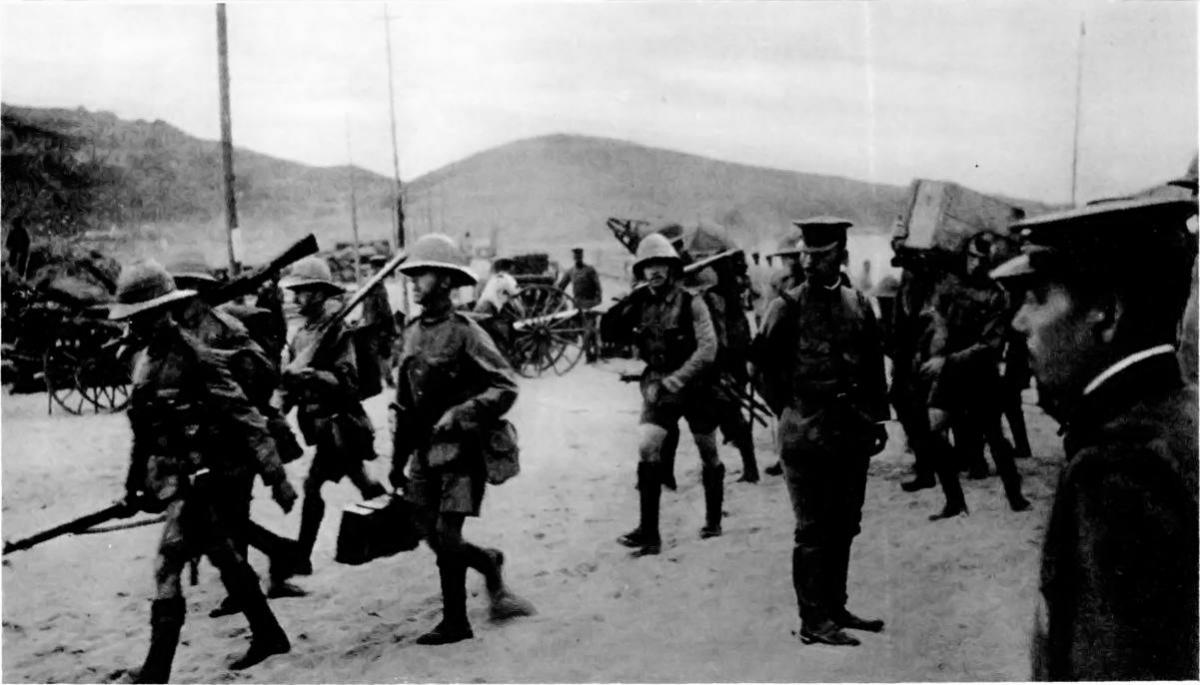
Lutonian Mr J. W. Bateman was in Tsingtau in August 1914 and returned there at the end of the siege, when the port was then under Japanese control.
"It was quite a performance getting into the town," said the returning Mr Bateman in a letter to his friend Mr Urban A. Norwood, a hat materials merchant, in Luton. "The Japanese military authorities examined my pass four times within the last ten miles of Tsingtau. I never found my knowledge of Japanese more useful than on this recent journey through the province of Shantung, as the Japanese are now nearly everywhere and are very suspicious of anyone wanting to get to Tsingtau, no Germans or Austrians being allowed in."
Mr Bateman had left Tsingtau with the last of the English residents on August 18th "as it would not have been very pleasant to be the only Britisher left while feeling against England was increasing".
He went to Shanghai, then on business to Hong Kong and Canton for about a fortnight, and a few weeks later, when he returned to Hong Kong, an order came from London for all Germans and Austrians to be turned out of the town and their businesses liquidated.
Mr Bateman recalled that as soon as war was declared by England, the three big German cruisers that were in Tsingtau (the Scharnhorst, Gneisenau and Leipzig - which were all later sunk off the Falkland Islands) left, and the port was, of course, placed under martial law.
"We Britishers enquired of the Governor, and learned that we could stay in the place so long as we liked, but the time might come when we could not leave. At the same time we all had to sign a declaration to the effect that we would not do anything hostile to German interests while we remained here.
"The town was kept in darkness, only a candle being allowed to go to bed by, and dark curtains being placed in all windows facing the sea. Reservists flocked in daily from all the different ports in China and Japan, and the place became filled with German uniforms.
"As soon as Japan entered the war it meant Tsingtau would be attacked, so that decided the Britishers to clear out while they had the chance. In Hong Kong the conditions were pretty much the same as in Tsingtau. Nearly all the civilians had been pressed into military or police duty, principally to act as a check on the increasing number of unemployed Chinese coolies, the regular [British] troops having been called home or to Egypt."
Mr Bateman said that on one evening when he was leaving Hong Kong by steamer for Canton there was a sudden boom from the hill to the right, and a shell burst into the water about 100 yards ahead and within about six yards of a small Chinese steamer. It turned out that the Chinese captain of the small boat had hung his permit flags upside down.
"I heard of another instance where a Japanese steamer was entering the harbour and did not stop when a shot was fired across her bows. So she received a shell on board which killed one or two men besides doing damage to the ship.
"There are torpedo boats and submarines in and out of Hong Kong harbour all the time, while an occasional cruiser looks in."
Mr Bateman went on: "Here in Tsingtau the feeling amongst the Germans against the British is very strong, and even people we used to regard as friends before the war will hardly speak to us. They hold the British responsible for bringing the Japanese here and taking the fine town away from them.
"There are thousands of Japanese here already, both military and civilian, and whereas the place was entirely German before it is now entirely Japanese, even to the names of the streets and signs over shops. The Japanese are gradually sorting out the Germans left here and transporting to Japan all those they find out who are serving with the German troops.
"The town has not been damaged much, but here and there large gaps are noticeable in the streets and houses caused by shells. In the hotel where I was - and am now - living, only one end was damaged, and that happened to be just my former corner. The shell came through the roof into my former bedroom, through the floor into the bedroom below, then on through the floor into the basement, causing quite a little damage altogether. When I returned and saw this I thought it was just as well that I went to Shanghai in August, instead of staying on through the siege.
"Several small contingents of Britishers have gone from Shanghai and Hong Kong to Europe and the front, many of the men having received commissions already. They have had good training as volunteers for several years out here or at home.
"I was congratulated in Hong Kong by several fellows on receiving one of these commissions. In fact, I received my letters of instructions from the military commandant to be on board the transport at a certain time, but it turned out the lucky man was another of my name."
[Beds & Herts Saturday Telegraph, April 24th, 1915]