

Luton War Pensions Committee were unanimous at a meeting on Friday (February 22nd, 1918) in supporting a resolution from Bradford urging the Government to see that greater care is exercised in the medical examination of recruits for the forces, on the ground that experience of dealing with discharged disabled soldiers has shown that many men who were physically unfit have been taken into the Army, and after very short service have become a charge upon the Ministry of Pensions.
A kindred matter to this was the question of discharged disabled soldiers suffering from tuberculous diseases attributable to war service, it being pointed out that although the men were in receipt of the full disablement pension, the money was not sufficient to purchase the eggs, milk etc necessary for their effective treatment.
The Secretary was reported to have sought and been granted the assistance of the Mayor's Fund in one particularly urgent case, but it was argued that it was the duty of the War Office to nourish these men back to health and strength.
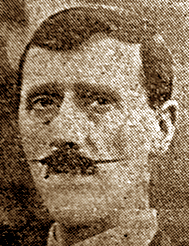 Mr W. J. Mair (pictured right) said both the Local and Appeals Tribunals had for the last two years been unanimous in making one of the strongest stands against men being taken into the Army if they or their family had any trace of tuberculous disease, and the Pensions Committee, ever since it was formed, had laid it down as a guiding principle that if a man was taken into the Army and broke down in health through his training, the responsibility should be upon the State for that man's breakdown. He could conceive nothing more pathetic or tragic than a man with tuberculosis tendencies taken into the Army and breaking down in health, discharged and recommended for special treatment with an allowance that did not permit of his having that treatment.
On the proposition of Mr G. Wistow Walker, seconded by Councillor Chapman, a resolution was passed requesting that an increase of pensions or extra financial assistance should be granted in these cases, and suggesting that local Pensions Committees should be empowered to make the emergency grants on this account.
Another matter which called forth strong remonstrations was the question of men sent home pending discharge without any means to procure the necessaries of life. The Secretary said he had had numerous applications for loans from men to enable them to exist until they received their settlements, and the Ministry of Pensions had ruled that under no circumstances were treasurers or secretaries of War Pensions Committees to make advances in respect of settlements or pensions said to be due to such men.
Mr W. Phillips, the honorary head of the Luton district for assisting discharged sailors and soldiers, had placed some small funds at the disposal of the Secretary to be used at his discretion to temporarily assist any urgent case, and the Secretary said he had been the means of helping one case, but it was urged there was a much bigger question behind it all.
Mr Mair explained that men were sent home discharged, but their discharge was post-dated a week or two, and in the meantime they received no ration money or allowance, and he held it was not fair. If he was kept in barracks pending his discharge he would have to be kept, and in sending the man home the Government were trying to shirk a responsibility.
Mr W. J. Mabley moved that a resolution should be sent to the Minister of Pensions with a request that it should be forwarded to a responsible quarter, protesting against men being sent home with post-dated discharge papers and thus left without means of subsistence.
He maintained that the Government were deliberately shirking their responsibility, because it must be within their knowledge that they were sending men back into homes practically destitute.
Councillor Murry Barford seconded the proposition, although he could not agree that the Government or any of its departments was doing this deliberately. His own feeling was that there was pressure of work, and that this was a matter which had been inadvertently overlooked.
The Chairman did not agree with Mr Barford. His view was that the Government should and did know. If it was a question of one department against another it was the old cry, and it was time it was stopped.
Mr William Phillips was of the same opinion, because the same sort of thing had been going on all the way through, long before Ware Pensions Committees were set up, and Councillor W. J. Primett said it was immoral and a matter of red tape. The proposition was finally agreed to.
[The Luton Reporter: Tuesday, February 26th, 1918]