

Militarism and the Women's Movement was the title of an address given by prominent Suffragette Miss Agnes Maude Royden in Luton Town Hall on Thursday evening under the auspices of the Luton Society of the National Union of Women's Suffrage Societies.
Chairwoman Mrs Violet Lewis said there were people who thought that at a time like this suffragists should not hold meetings but, when considering the reasons why the meetings were being held, that opinion would be altered. They were not prompted by any feeling of animosity to men at any time.
They had always been quiet and peaceful and worked in a strong, dignified way with the one idea that some day they would have the vote granted them. At this time, when the country was in the throes of war, it became women to consider their position.
They had been called upon to fill positions in many spheres, and she thought women would be still more called upon to do this work. That was why they went on with their propaganda.
 The chairman, herself a member of the Luton Board of Guardians, went on to consider the position of women in civic life, and spoke of their usefulness. She had some experience of the work of the poor law and she knew there was a great deal for women to do on the Board of Guardians.
There were heaps of things which women must look into, work which could be done better by women, and her colleagues could bear her out on that.
Women must prepare for the great task before them, and this suffrage organisation was trying to interest women in work which belonged to women.
Mrs Lewis spoke of the splendid behaviour of the men at the front, and women knew what they were going through, and "God bless them for it". Women were wanted to do their part here.
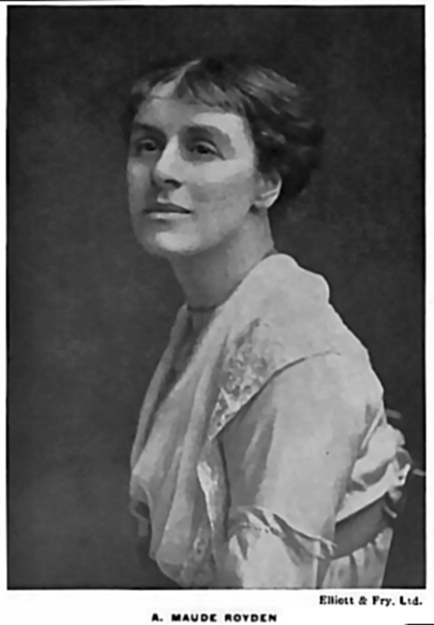
Miss Royden (pictured) said they were bound to look at the past and also at the future, and to ask themselves why such appalling sacrifices were necessary, and how they could be prevented. Thousands of men had gone to the front in a spirit different from that with which men used to go in past wars.
She supposed there must have been individuals to whom was as terrible as it could be, but she could not help feeling there was a widespread feeling today among our soldiers that war was altogether so frightful that the only justification for it was the hope that we were going to put an end to wars in the future. Men had taken up arms with the deliberate purpose of putting an end to the spirit of militarism.
Suffragists were doing their duty in this struggle because they contended that while they looked to the suffering they must also take a share in the removal of the cause. Fighting and the conduct of the war took the whole of the energy of our men at the present time, and if there was to be hard thinking as to the future, it must be done by those at home.
She could not imagine a more patriotic duty than that which impelled suffagists to call women together in the work of preparation. It was the very life and soul of the women's movement that it should oppose militarism because they realised that, in proportion, as they appealed to violence they cut the ground from under the feet of women.
If they accepted the principle of violence they accepted the principle that women were inherently inferior to men. The women of Germany were in that position. The German woman could not fight, and therefore she was of no account. She was merely the breeder of soldiers.
[Beds & Herts Saturday Telegraph, May 15th, 1915. Image: Wikimedia]