The following graphic account is from a letter by a young subaltern of the 2nd Battalion Bedfordshire Regiment. It brings very closely home the realisation of what that fight meant to the heroes of the county regiment. In this battalion are officers and men from Luton and district.
Doubtless you have read of the stand we took there, and did not know it was us, and how we practically took the wood after three other battalions had failed.
Stories from The Luton News: Thursday, July 13th, 1916.
The Saturday Telegraph gave news of the "Great Advance" or "Big Push" at the start of the Battle of the Somme in its July 1st edition. The Luton News followed up with first details of those killed and wounded before and during the action. Many more were to follow.
Only occasionally have we heard anything of the county regiment's share in the great advance. From letters that have appeared it seems that out gallant fighting men had a comparatively easy task in the first stages, and casualties were quite small.
Some marvellous escapes on the part of a Luton lad at the front have just come to light. He is Cpl Sidney Philpott, son of Frank and Georgina Philpott, of 46 Cardigan Street, the father being a hat manufacturer.
Sidney (pictured) went to Canada seven years ago, and was getting on well when the war broke out and the call came for service with the colours. Like a true Luton lad, he was off to the recruiting office on the very first day of the war, and he went into training with the first Canadian contingent.
Stories from the Beds & Herts Saturday Telegraph: July 8th, 1916.
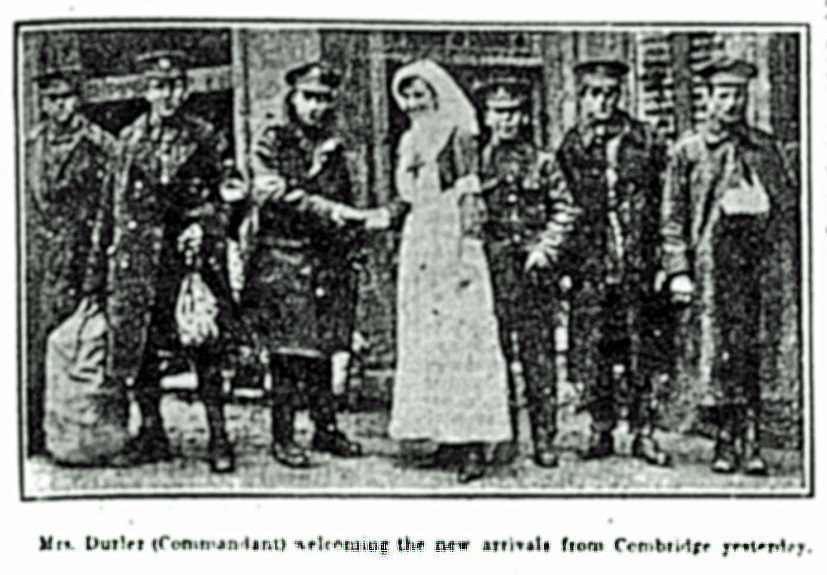
A little procession of motor-cars, filled with soldiers, went along New Bedford Road yesterday afternoon about 2.30. They constituted the biggest batch of wounded men who have yet gone to Wardown V.A.D. Hospital.
Among the Luton lads wounded in the "Push" in France and Flanders is Pte Arthur R. Edwards, 8133, 17th Manchester Regiment. He had been in Manchester for some years when he enlisted, but prior to going to Cottonopolis he was at Vyse, Sons and Co Ltd, Luton. He was employed in straw trade by Messrs Wilson, Bothamley and Co, of Manchester, and was therefore constantly in touch with Luton.
In the course of a graphic description of incidents of the great battle going on in France, Mr Phillip Gibbs, writing on Sunday, referred to the capture of Montauban.
The attack on Montauban was one of our best successes yesterday, he wrote. The men were mainly Lancashire troops, supported by men of the Home Counties, including those of Surrey, Kent, Essex, Bedford and Norfolk. They advanced in splendid order, straight for their objective, swept over the German trenches, and captured large numbers of prisoners without great loss to themselves.
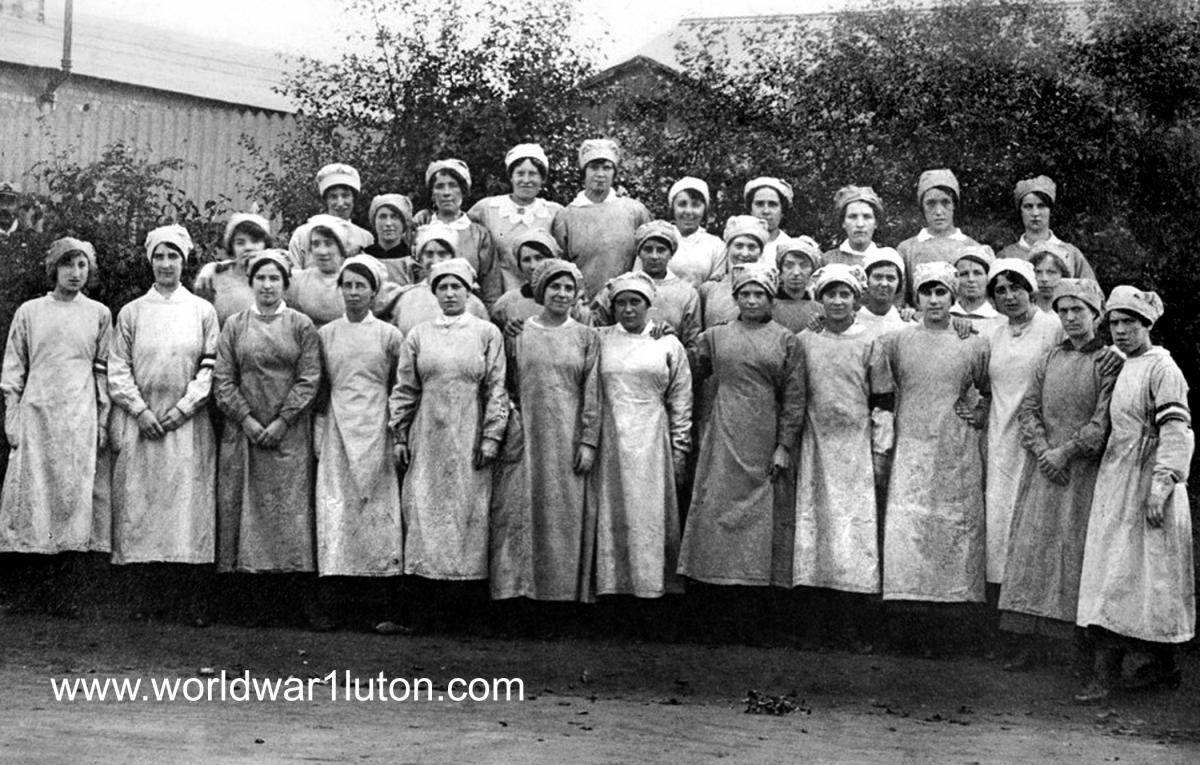
In recent years we have at various times heard of the hockey girl, the tennis girl and golfing girl, but the girl that counts today is the working girl, and locally the type that is pre-eminent is what has become to be known as "the munition girl".
Stories from the Beds & Herts Saturday Telegraph: July 1st, 1916.
"German defences penetrated for 16 miles" and "The great advance - official". These were two of the headlines with which the Saturday Telegraph told Luton readers about the launch of what would be known as the Battle of the Somme - 141 days of unprecedented bloodshed that would cost many Lutonians their lives.
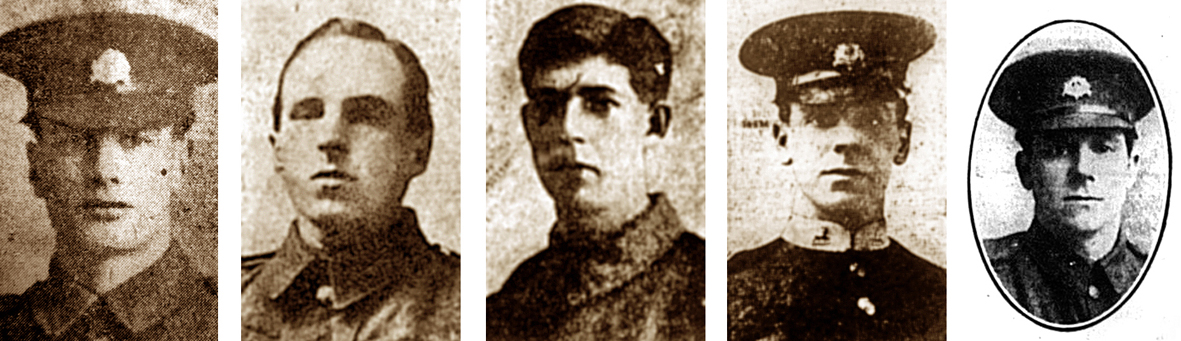
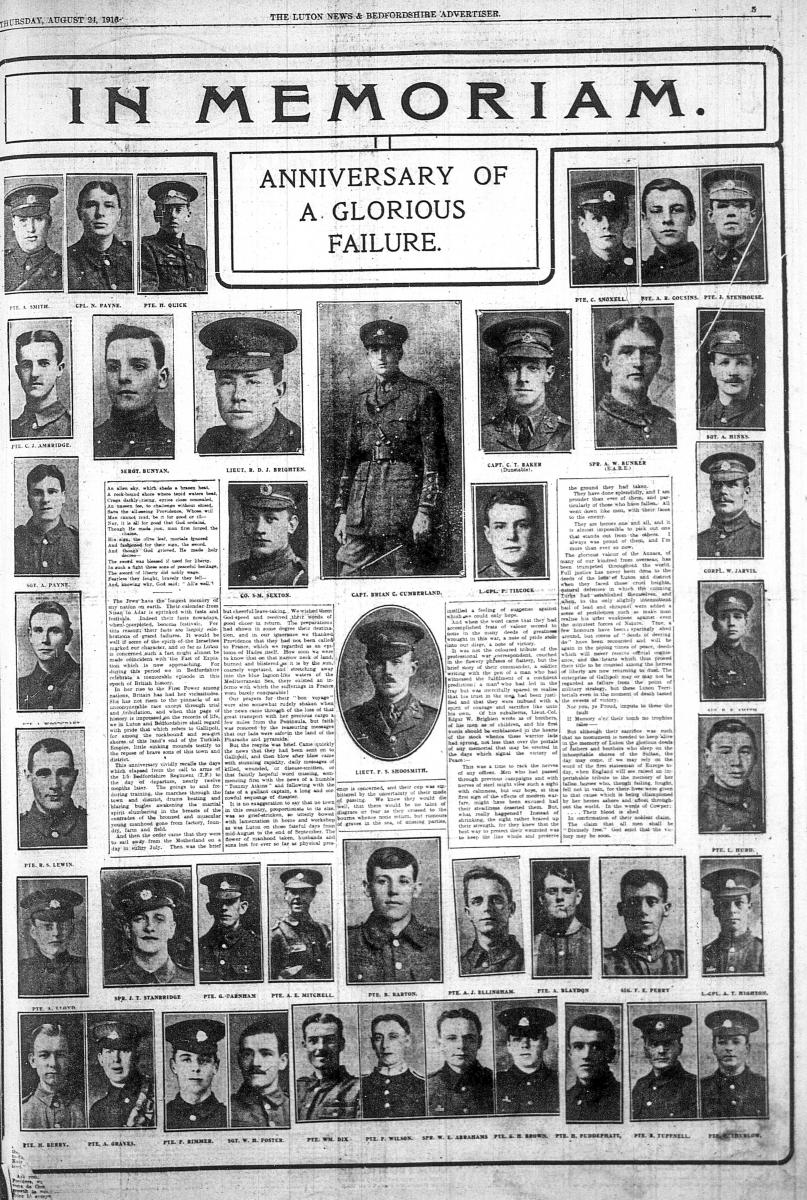
Five of the Lutonians who gave their lives on the first day of the Battle of the Somme on July 1st, 1916. Left to right: Pte Frederick Armstrong, Pte Frederick Clarke, Pte Stanley Fensome, Sgt Percy Rickard and Pte Lionel Worsley. The stories of these and subsequent men who paid the ultimate price will be found as an ongoing project here.
Wearing the hospital blue uniform and looking very pale and ill, Alfred Young, a Luton man belonging to the Hertfordshire Yeomanry, was brought up before Mr Hugh Cumberland at the police station on Friday [June 30th, 1916] and, when charged with being an absentee from the Yeomanry, he replied: "No, not from there, but from Tottenham Hospital".
"This man will be too expensive in the Army," confessed the Military Representative at the Luton Tribunal on Thursday [June 29th, 1916], in the case of a master shoeing and general smith who said he had eight children, besides having lost one.
The children ranged from 13 to three weeks, and the Town Clerk (Mr William Smith) wanted to know if the applicant had "to count them to see they are all in at night, like you do chickens".